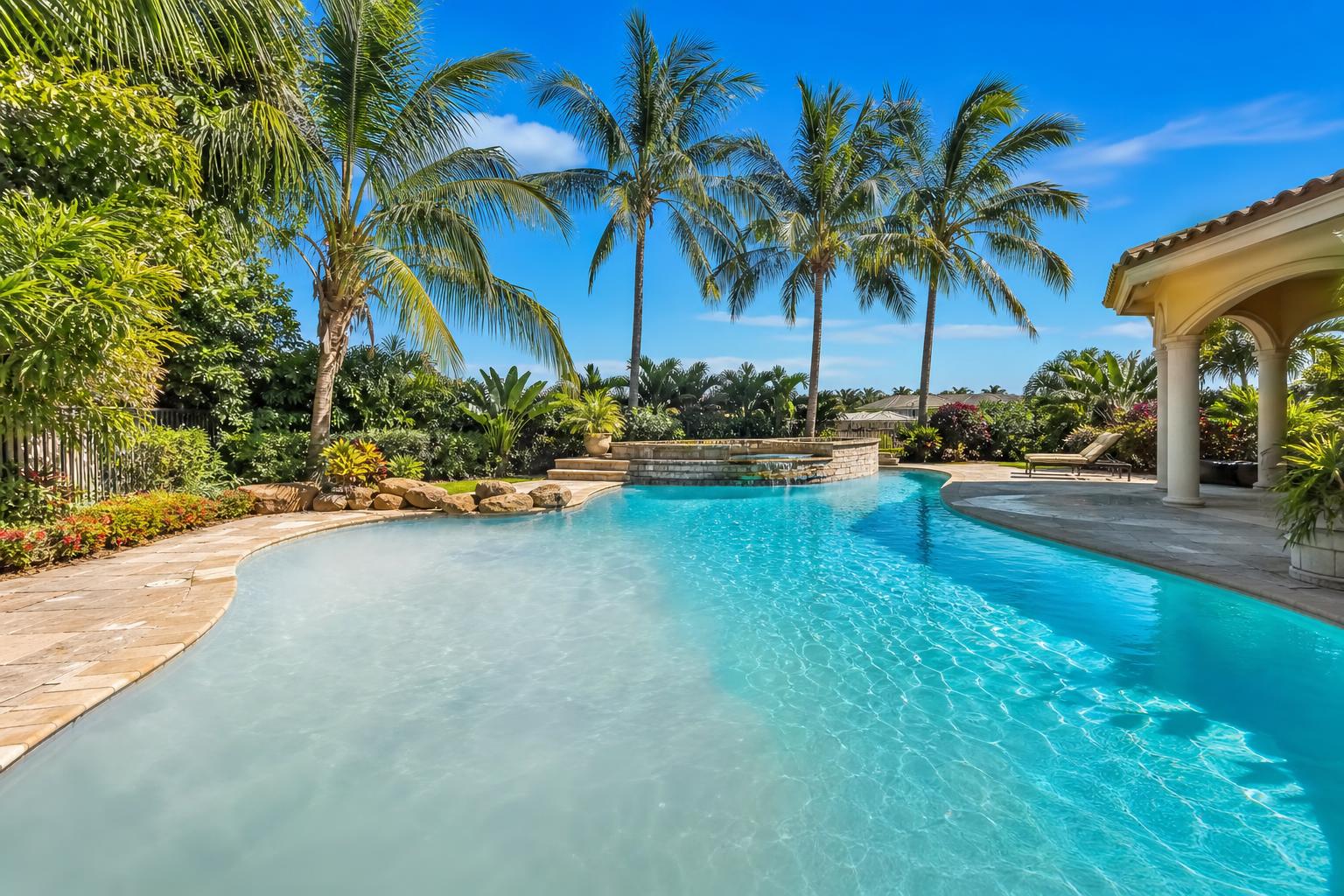
Why Your Parrish FL Pool Loses Chlorine Fast

Why Your Parrish FL Pool Loses Chlorine Fast: A CPO Explains
If you have ever wondered why your Parrish FL pool loses chlorine fast, you are not alone. This is one of the most common questions our certified pool operators hear from homeowners across Manatee and Sarasota County. You add chlorine, and within a day or two it seems to vanish. The good news is there are real, fixable reasons why this happens. Understanding them can save you time, money, and a lot of frustration.
Florida Heat and Sun Are Your Chlorine’s Biggest Enemy
Florida summers are brutal, and that intense sunshine does more than give you a tan. Ultraviolet rays from the sun break down free chlorine in your pool water at a rapid rate. In fact, unprotected chlorine can lose up to 90 percent of its effectiveness within just a couple of hours of direct sunlight. In Parrish and Bradenton, where we see blazing sun for most of the year, this is a daily battle for pool owners. Using stabilized chlorine or adding cyanuric acid, also called a chlorine stabilizer, helps protect your sanitizer from UV degradation. Without it, you are essentially pouring money down the drain every time you add chlorine on a sunny day.
High Bather Load and Organic Contamination in Parrish Pools
Every swimmer that jumps into your pool brings with them sunscreen, body oils, sweat, and other organic matter. These contaminants consume chlorine rapidly because chlorine must work hard to oxidize and break them down before it can sanitize the water. During the summer months in communities across Parrish, Palmetto, and Lakewood Ranch, families are using their pools almost every day. That heavy bather load is one of the top reasons why your Parrish FL pool loses chlorine fast. Shocking your pool regularly with a non-chlorine or chlorine shock treatment helps burn off these combined chloramines and restores your free chlorine levels quickly.
Algae Growth Consumes Chlorine in Florida Pools
Florida is not just hot, it is also humid and rainy. During our rainy season, pools get flooded with fresh water, pollen, and airborne debris that feed algae growth. Algae are chlorine consumers. Even when you cannot see visible algae, microscopic algae spores can be actively consuming your sanitizer. If your chlorine level keeps dropping without an obvious reason, algae may already be growing in your pool. A proper algaecide treatment combined with brushing the walls and floor of your pool can help eliminate the problem before it gets worse. Our team at Primo Pool Care has seen this issue all across Ellenton and Bradenton during rainy season flare-ups.
Imbalanced Water Chemistry Destroys Chlorine Efficiency
Chlorine does not work well in a vacuum. It needs the right water chemistry environment to do its job. If your pool has a high pH level, your chlorine becomes far less effective even when the number on the test strip looks fine. At a pH of 8.0, chlorine is only about 20 percent effective. At a proper pH of 7.4 to 7.6, it can be around 60 percent or more effective. Cyanuric acid levels that are too high can also lock up chlorine in what is called chlorine lock, making it practically useless. Total alkalinity, calcium hardness, and phosphate levels all play a role in how well your chlorine performs. This is why professional water testing is so much more reliable than a basic home test strip.
Phosphates Feed the Problem in Sarasota and Parrish Area Pools
Phosphates are nutrients that come from fertilizers, rain runoff, leaves, and other debris. Florida landscaping is lush and beautiful, but it also means phosphate levels in local pools can spike quickly. High phosphate levels fuel algae growth, which in turn consumes chlorine at an even faster rate. Removing phosphates with a dedicated phosphate remover is a step many pool owners skip, but it makes a significant difference in how long your chlorine actually lasts. Our certified pool operators regularly test for phosphates in pools throughout Parrish, Sarasota, and the surrounding areas.
Your Pool Equipment May Be Making the Problem Worse
An undersized or malfunctioning pump and filter system can also contribute to rapid chlorine loss. When water is not circulating properly, chlorine cannot distribute evenly throughout the pool. Dead zones form where algae and bacteria thrive, consuming sanitizer without being noticed. A salt chlorine generator that is not calibrated correctly may also be producing less chlorine than you think. Regular equipment checks and professional maintenance help ensure your system is working at full capacity so your chemical treatments actually do their job.
Let Primo Pool Care Solve Your Chlorine Loss Problem Today
Understanding why your Parrish FL pool loses chlorine fast is the first step toward a cleaner, safer, and more enjoyable pool. The causes range from Florida sunshine and heavy swim use to poor water chemistry and hidden algae growth. The fix requires a professional eye and a consistent maintenance plan built for Florida conditions. At Primo Pool Care, our certified pool operators serve homeowners in Parrish, Bradenton, Palmetto, Lakewood Ranch, Sarasota, Ellenton, and Duette with expert pool care you can trust. We take the guesswork out of pool chemistry so you can focus on enjoying your backyard oasis. Call us today at (941) 222-2092, send us an email at info@primopoolcareflorida.com, or visit us online at primopoolcareflorida.com to schedule your professional pool assessment. Your pool deserves the best care, and so do you.
Need weekly pool service in Parrish? Primo Pool Care is local and CPO-certified — $110/mo for screened pools, chemicals included. See our Parrish pool service page or call/text (941) 222-2092.
Related Post
Why Is My Pool Cloudy? Bradenton FL Guide
Why Is My Pool Cloudy in Bradenton FL? If you have been staring at your [...]
Pool Gas Heater Not Igniting Troubleshooting Bradenton
When your pool gas heater not igniting troubleshooting Bradenton homeowners face can turn a relaxing [...]